How the modern lash was born — from brush bristle to Korean PBT
Silk, mink, faux mink, cashmere. Four names on a lash tray, and not one of them is what it says. Here is what actually happened — from someone who imported the fiber from the start.
Nearly every lash extension in the world is made from one material: PBT — polybutylene terephthalate, a fine synthetic monofilament. The marketing names layered on top of it — silk, mink, faux mink, cashmere — have confused buyers for twenty years. This is the real story of that fiber, and of the two Korean brands that built the modern lash industry.
01Where does lash extension fiber actually come from?
Before it ever touched an eye, this fiber made makeup brushes and toothbrush bristles. Korean PBT started as a precision monofilament for daily-chemical brush work — an application that demands dead-straight filaments and consistent diameter. That brush-grade discipline is exactly why the same fiber, tapered and heat-set, became the gold standard for lashes.
02What is KONEX — the first Korean PBT lash fiber?
KONEX was the first Korean brand to define lash-grade PBT. Its fiber holds its stiffness and straightness, and because PBT is highly stable, its curl memory after heat-setting is excellent. KONEX wasn't only used for extensions — the 3D, multi-layer and faux-mink strip lashes of the era were built on it too. By 2006–2008, demand outran what KONEX could supply — and that gap opened the door for a second brand.
03What is ShyneX PBT fiber, and how is it different?
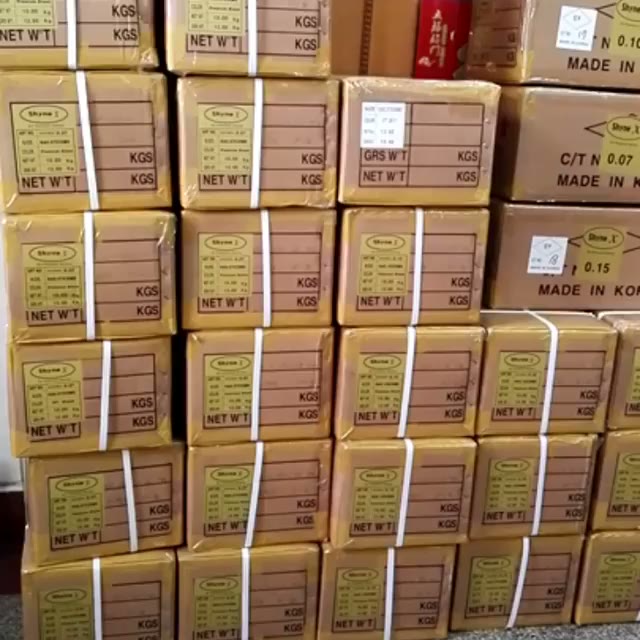
ShyneX is also PBT, but with a different character: softer, with a fine, long tapered tip. Where KONEX launched with a short 3–5mm double-tapered tip, ShyneX arrived with both 3–5mm (short taper) and 6–8mm (long taper) — a finer, more natural transition toward the lash tip.
04Are "silk", "mink" and "faux mink" lashes actually those materials?
Here is the truth almost no one in the industry knows. A Korean lash brand, BLink, took those two taper lengths — short and long — and named them "Silk" and "Mink" to tell them apart. Both were the same PBT. The names were never about silk fabric or mink fur.
Silk and Mink were never materials. They were taper lengths, dressed up with prettier names — and the whole world took them literally.
Then, around 2016, China really did make lash extensions and strip lashes from real mink fur, sourced from mink farms in Hebei. A single pair of real-mink false lashes sold for up to $25. It was, in a word, crazy. Real mink didn't last: animal-welfare concerns rose, its curl retention was worse than PBT, its lengths couldn't match the precision of synthetic fiber, and the price stayed sky-high. Real mink left the lash market — and the name that replaced it was "Faux Mink", which is, once again, simply PBT.
05How do you spot cheap or low-grade lash fiber?
The base PBT is transparent. Black isn't natural to it — early Korean fiber was dyed black by mixing the three primary colours, then the tapered tip was shaped. That dyeing step is where quality is won or lost.
Under the high heat of curl-setting, colour can fade at the delicate tip. Look closely and cheap or early fiber gives itself away: KONEX tips could go slightly blue; flat fiber tips could go near-white; ShyneX tips could go blue, sometimes purple. Early ShyneX also had some straightness issues, and because its tip was so fine, the very tip could zig-zag after heat-setting — visible on close inspection. An over-matte body that reads as a dull grey rather than a true black is another tell of weaker fiber.
As the makers refined their process and answered market feedback, both brands released true matte-black fiber that solved the fading. ShyneX went further, with distinct series — Premium Black, Silk Black, Velvet Black.

06How did lash extensions go from loose bulk to lash-on-card?
Lash extensions were first sold as loose bulk — curled, cut to length, packed into 1-kilogram bags and sold by the kilo. The raw fiber shipped from Korean factories to Qingdao, where traditional strip-lash workshops processed it.
Two upgrades changed everything: better pressing moulds and heat-resistant double-sided tape. Together they let the first step — pressing and cutting the fiber to shape — hold on the tape, so every lash strip could be placed cleanly onto a paper card. The modern 5cm × 11cm card, with strips trimmed to a clean band and arranged in 12, 16, 18 or 20 rows, was born.
07Why does fiber straightness matter for volume fans?
As overseas training and technique advanced, the classic 1:1 single-strand set gave way to volume lashes — fanning 3 to 6 fibers at once into a shaped bloom. Beautiful, but demanding. So China industrialised it as premade fans: 2D, 3D, 4D, 6D, 8D, then 10D, 14D, 16D — still popular today.
Premade fans are shaped by mould, and mould work is unforgiving about fiber straightness. This is where KONEX's stiffness quietly became decisive again. The hand-woven shapes that demand the most — YY, W, and 3D–6D "Clover" — have historically insisted on it. These fans and woven shapes save the lash artist enormous styling and placement time, which is exactly why they took over.
A fiber can be perfectly straight and still fail as a premium lash. The tip is the dividing line.
Korea's third source, in Daegu, proved the point. Its fiber was straight — but its tip went white under heat-setting, so it couldn't win the high end, and it couldn't beat domestic BASF-based fiber on price at the low end. It was squeezed out of lashes entirely, back into brush fiber. The fiber that began as a brush, for some makers, quietly returned to being one.
08Korean PBT vs domestic lash fiber — what's the real difference?
Domestic Chinese fiber has come a long way. Its blackness, matte finish and softness are now genuinely good, and it powers most of the world's value-tier lashes. But on the one metric that matters most — curl retention under stress — a real gap remains. Here is the boiling-water test, honestly reported:
| Fiber | Curl after boiling water | Filament itself | Curl lifespan |
|---|---|---|---|
| Korean PBT | ~25% rebound only | Stays intact | 12–18 months |
| Domestic "Cashmere" | 50–100% curl loss | Shrinks or zig-zags | 6–12 months |
Note that Korean fiber is not unchanged — it rebounds about a quarter. Honesty matters more than a marketing absolute. The decisive difference is that Korean fiber's filament survives the stress intact, while cheaper fiber degrades in its own structure, not just its curl.

This is why the smart position isn't "only Korean" or "cheapest wins" — it's honest tiering: premium Korean fiber where 12–18-month retention is the point, and a strong value cashmere tier for price-sensitive work. "Cashmere," for the record, is another marketing name — not actual cashmere. The pattern never really stopped.
09Where does LashPlus stand in this story?
We import genuine Korean PBT lash fiber firsthand, we supply lash makers across Qingdao's Pingdu cluster, and we prove the material in our own LashPlus lash series. We tell customers exactly which tier they're buying — Korean-fiber premium for longevity, cashmere for value — because after twenty years of watching pretty names hide plain PBT, we think the honest version sells better.
If you're sourcing the material itself, see our Korean PBT lash fiber for wholesale & OEM →